Author: Persia Atyabi

  • Toronto Listings Fall Faster Than Sales | Real estate made clear and strategic. Let’s get you moving. 📱 [647-703-4814] | 🌐 [www.TeamPersiaVIPHomes]

    As someone who’s spent years guiding clients through the ups and downs of Toronto’s real estate market, I keep a close eye on the numbers that truly shape our experience as buyers and sellers. In late Q3, we saw 5,040 home sales across the GTA—a drop of about 9% compared to last year. But what stood out to me even more was the sharper decline in new listings: just 16,500, down approximately 14%. This has nudged the sales-to-new-listings ratio up to 31% from 29%, not because more buyers are out there, but because fewer homes are hitting the market.

    Average selling prices and benchmark prices both slipped by about 5% year-over-year. Active listings wrapped up the quarter at 26,100, which is a 9% decrease, leaving us with roughly 5.2 months of inventory—almost unchanged from last year. Homes that did sell spent an average of 34 days on the market, but if you look deeper, you’ll see properties actually spent closer to 51 days when factoring in relisting. That’s an important nuance for anyone timing their move.

    While the raw average price inched up month-over-month to $1.01M, the adjusted numbers tell a more cautious story. A slightly tighter inventory means we’re reviewing comparables with fresh eyes, but that doesn’t automatically translate into higher asking prices. For those considering their next step—whether it’s your first home or your next one—understanding these shifts is key to making confident decisions.
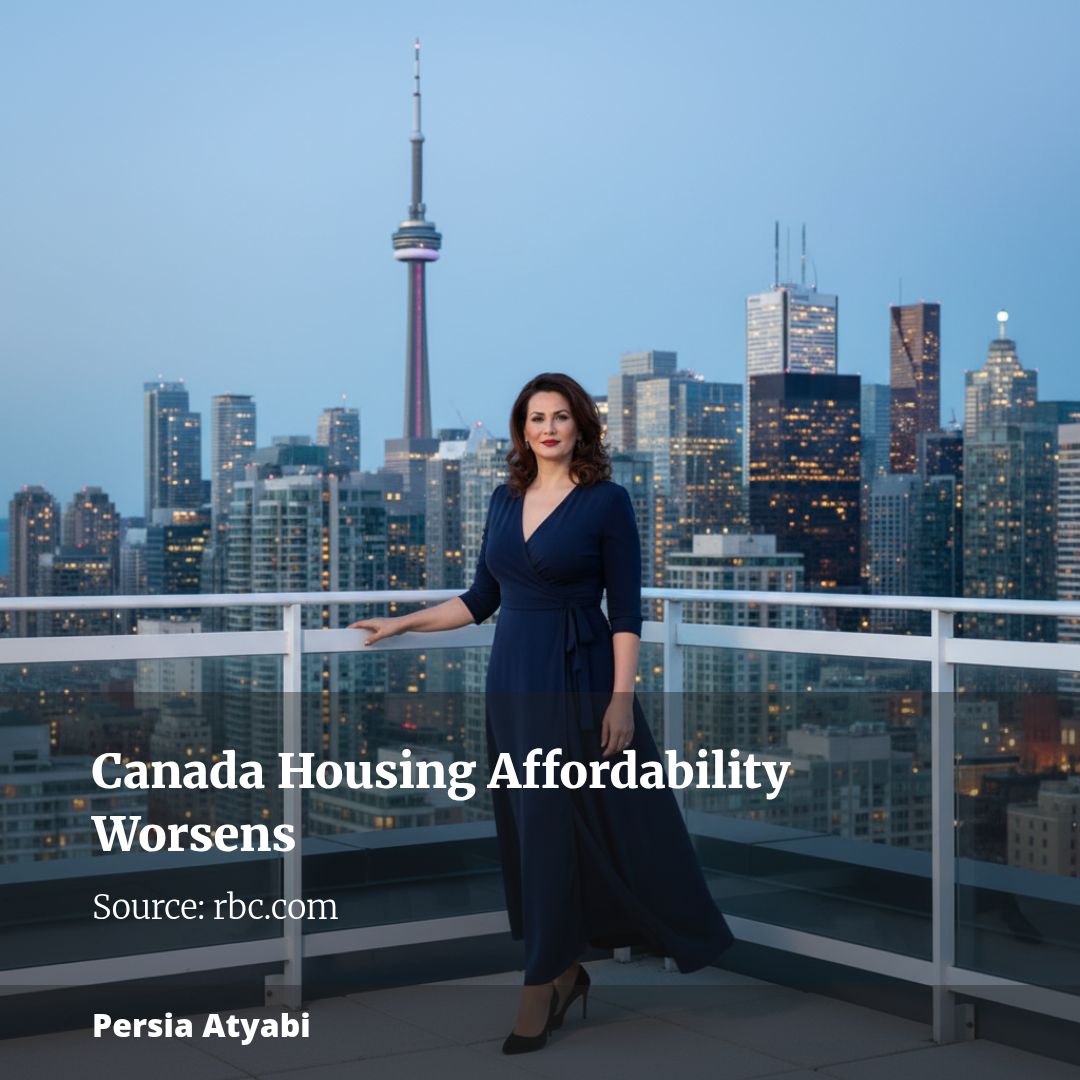

  • Canadian Housing Affordability Remains Stable in Many Regions

    Canadian Housing Affordability Remains Stable in Many Regions

    We’ve seen a modest improvement in housing affordability across Canada in Q2, with rising incomes and steady home prices offering some relief. Here in Toronto—and in Vancouver, too—buyers made some gains, while certain Prairie and Atlantic markets faced a tougher landscape. Of course, as someone who’s spent the past decade immersed in Toronto real estate, I know firsthand how quickly things can shift. With interest rates expected to rise again in 2027, the cost equation may change once more. Navigating this market means keeping a close eye on both the numbers and the bigger picture—something I’ve built my approach around, always putting my clients’ needs first as the market evolves.

    Continue to full article

  • Toronto board of trade urges Ontario to amend zoning and building code rules to spur housing growth

    Toronto board of trade urges Ontario to amend zoning and building code rules to spur housing growth

    As someone who’s spent years guiding clients through Toronto’s ever-changing real estate market, I see firsthand how policy shapes the options available to buyers and sellers. The Toronto Board of Trade is now urging Ontario to revisit its zoning and building code rules—a move that could have a major impact. Right now, outdated regulations could mean Ontario misses its goal of 1.5 million new homes by 2031, falling short by over 550,000 homes. Standardizing zoning and modernizing building codes would not just cut down on costs and delays; it could open more doors for people hoping to find a place that truly fits their needs. This is about more than numbers—it’s about making the dream of homeownership more attainable and affordable for everyone in our city.

    Continue to full article

  • Vancouver and Toronto Offer New Opportunities for Homebuyers

    Vancouver and Toronto Offer New Opportunities for Homebuyers

    It’s hard to miss the shift: both Toronto and Vancouver—once the hallmark cities for high-end Canadian real estate—are experiencing significant changes. Toronto’s housing market has seen an 11% drop in just a year, the steepest among 23 major cities, and prices are now nearly 30% below their peak. Higher borrowing costs, the foreign-buyer ban, and increased inventory have all played a role. Vancouver isn’t far behind, with prices down 10% this past year and 20% since 2022. Further softening is anticipated.

    Having guided clients through Toronto’s evolving market for a decade, I’ve seen firsthand how quickly conditions can change. Whether you’re considering your first home or rethinking your next move, a thoughtful approach—and up-to-date insight—makes all the difference in finding your footing.

    Continue to full article

  • Toronto Falls Into Moderate Bubble Risk | Real estate made clear and strategic. Let’s get you moving. 📱 [647-703-4814] | 🌐 [www.TeamPersiaVIPHomes]

    After a decade spent guiding clients through Toronto’s evolving real estate landscape, I’ve seen the market shift in ways few could have predicted. According to a recent global wealth management report, Toronto just posted the sharpest annual price drop among 23 major cities—home values fell about 11% in the last year. That’s a dramatic turn after years leading the pack from 2014 to 2022, when real prices doubled on the back of rapid population growth, surging investor activity, and a construction boom.

    But since 2022, higher interest rates, a foreign-buyer ban, and more homes coming to market have pushed prices down close to 30% from their peak. The report now places Toronto in the moderate bubble-risk category, largely because the correction has brought home prices closer to levels residents can afford.

    What does this mean for you? The outlook suggests continued near-term pressure on prices, as inventory rises and buyers remain cautious with the possibility of more rate hikes. Whether you’re entering the market for the first time or considering your next move, these shifts can feel overwhelming. My approach is always to keep you informed and supported, so you can make decisions with confidence—whatever the market brings.

  • Toronto – Most Expensive Homes of September 2026 | Real estate made clear and strategic. Let’s get you moving. 📱 [647-703-4814] | 🌐 [www.TeamPersiaVIPHomes]

    Every September, Toronto’s luxury real estate market unveils a remarkable lineup—and this year is no exception. For those who follow the city’s most exclusive addresses, here are the top listings making headlines for September 2026:

    1. Listing C13780934 — $22,500,000
    2. Listing C13475538 — $21,995,000
    3. Listing C13619112 — $17,995,000
    4. Listing C13732176 — $17,200,000
    5. Listing C13525554 — $16,500,000
    6. Listing C13693884 — $14,880,000
    7. Listing C13752980 — $13,500,000
    8. Listing C13816180 — $12,995,000
    9. Listing C13764668 — $12,880,000
    10. Listing C13227720 — $12,500,000
    11. Listing C13142106 — $12,295,000
    12. Listing 40826557 — $11,995,000
    13. Listing C13092402 — $11,995,000
    14. Listing C13640040 — $11,995,000
    15. Listing C13763100 — $11,995,000

    Having spent a decade immersed in Toronto real estate, I’ve seen how these high-end homes set the tone for our entire market. Each number here represents not just a property, but a distinct lifestyle—something I love helping clients discover at every stage, whether you’re dreaming big or just getting started. If you’re curious about what these numbers mean for your own real estate journey, I’m always here to share insights.

  • Toronto Condo Supply Faces Tariff Exposure | Real estate made clear and strategic. Let’s get you moving. 📱 [647-703-4814] | 🌐 [www.TeamPersiaVIPHomes]

    Navigating Toronto’s condo market has never been straightforward, but recent shifts in construction economics have added a new layer of complexity. As trade tensions drive up material costs, we’re seeing tangible impacts on new condo supply. According to a federal construction index, costs for fabricated metal increased by 2.1% this past quarter, while structural steel rose by 1.8%. These numbers matter because so much of Toronto’s ongoing development still relies on steel and rebar—materials that have seen notable price hikes.

    With condo starts already on the decline, our market is especially vulnerable to any further supply-side shocks. There isn’t much new construction to cushion the blow, leaving buyers and sellers alike more exposed to pricing pressures. Having spent a decade guiding clients through this city’s ever-changing landscape, I’ve learned that understanding these behind-the-scenes factors is just as important as finding the right address. It’s all part of making informed moves, whether you’re buying your first place or your next.

  • Happy Thanksgiving | Real estate made clear and strategic. Let’s get you moving. 📱 [647-703-4814] | 🌐 [www.TeamPersiaVIPHomes]

    The perfect opportunity to embrace your inner "foodie" and unbutton your pants at the dinner table!In Canada, post-Thanksgiving is all about creative cranberry sauce solutions. Cranberry sauce pancakes, anyone?It's that time when multiple ovens are a blessing. Turkey, pies, casseroles – less stress!

  • Industry Updates: Single-Family Sales Rise, Resale Supply Tightens, Cultural Programming Expands

    Industry Updates: Single-Family Sales Rise, Resale Supply Tightens, Cultural Programming Expands

    Navigating Toronto’s real estate market means staying on top of every shift, and the latest industry updates offer plenty to consider. We’re seeing single-family home sales in the GTA rise, thanks in part to the expanded HST rebate—a welcome boost for many buyers. Meanwhile, condo sales remain subdued, and resale supply is tightening, which could put upward pressure on prices in the coming months. It’s also worth noting a slight dip in housing starts, while Toronto is taking steps forward with an AI pilot for building permits. After a decade guiding clients through every kind of transition—from first homes to luxury upgrades and smart downsizing—I know how these shifts can impact your next decision. If you’re weighing your options, let’s make sure you have all the facts as you plan your next move.

    Continue to full article

  • Choosing a Mortgage After a Rate Hold | Real estate made clear and strategic.

    After Canada's recent rate hold, policy stayed near low-2% and prime near mid-4%, leaving the fixed-versus-variable decision centered on payment flexibility and term length.
    Fixed mortgage pricing moved higher as government bond yields climbed in current weeks, while the central bank flagged inflation risks, sharpening attention on variable-rate exposure.
    A quarter-point variable-rate increase adds ~$1.25K in first-year interest for every $500K borrowed, before amortization effects, making payment stress-testing essential for borrowers.
    Variable mortgages often carry lower prepayment penalties, helping borrowers who may sell or refinance early, while fixed-payment variable loans can send more payment toward interest.
    Both mortgage types face the same stress test: borrowers qualify at contract rate plus roughly two points or a low-5% floor, whichever is higher.